


How to progress without feeling stupid in the gym

If you’ve ever searched “how do I stop feeling stupid in the gym?” or “how do I get over gym anxiety?”, you’re probably familiar with that worry about being watched. You don’t want to pick up a weight you can’t lift, get your exercise technique wrong or look like you don’t know what you’re doing.
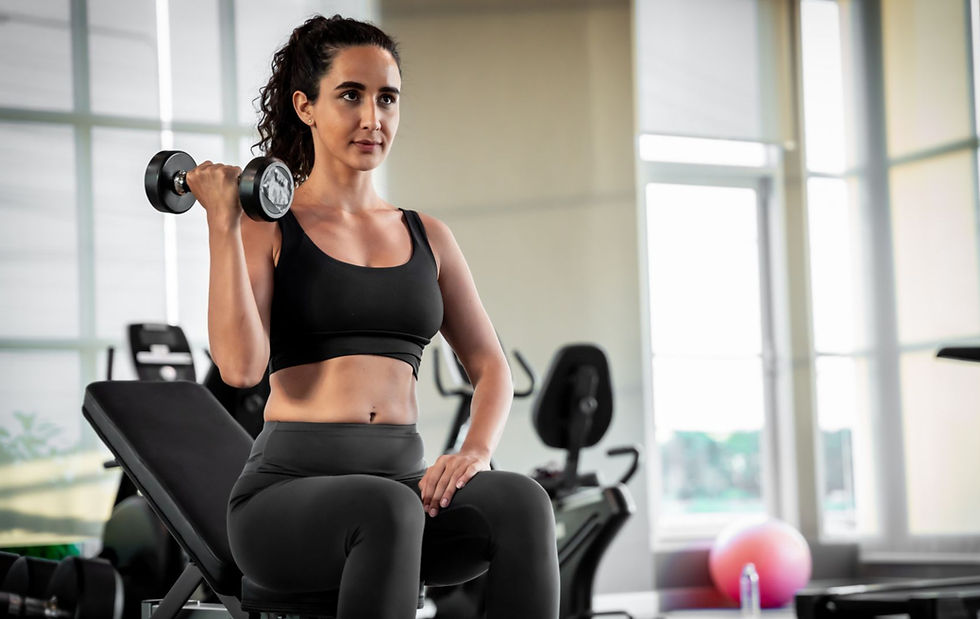
So you stick with familiar exercises and weights you know you can manage.
That’s understandable. But if your goal is to get stronger or build muscle, staying with what feels comfortable can eventually hold back your progress.
You're not there to impress anyone. Remember it's ok to be a newbie, everyone was once. Just understand and feel comfortable in what you're doing so you can move forward.
How to feel more confident in the gym
Learning how to feel more confident in the gym starts with having a plan. Knowing which exercises you’re doing, how to perform them and what you’re aiming for gives you something to focus on beyond what other people might think.
Confidence doesn’t mean knowing everything before you start. It comes from practising, asking questions and seeing yourself improve.
You’re allowed to be learning. You’re also allowed to find a weight difficult without feeling embarrassed, if you want to progress that's something you need to get used to.
Why am I not getting stronger?
“Why am I not getting stronger?” is a reasonable question when you’ve been working out consistently but your weights and reps haven’t changed.
When you first start strength training, the same workout can produce progress for a while. As you adapt, though, you usually need to increase the challenge to keep developing.
Three sets of ten isn’t the problem. Doing those same sets with the same weight indefinitely, when you could comfortably do more, might be.
Consistency matters, but your muscles also need a reason to adapt.
What is progressive overload?
What is progressive overload? It means gradually increasing the demands of your training as you become capable of doing more.
That might mean lifting a little more weight or completing more repetitions with the same weight and good technique.
Have a read of Progress Overload
You don’t need to make every workout harder. Progress happens over weeks and months, and some sessions will feel better than others.
The aim is to ask a little more of your muscles over time, rather than repeat a comfortable workout forever.
When should I increase my weights?
If you’re wondering “when should I increase my weights?”, start by looking at how your current sets feel.
Suppose your plan says three sets of ten. Once you can complete all three sets with controlled technique, and the effort matches your plan, try the smallest practical weight increase.
With the heavier weight, you might manage eight reps, then seven, then six. That doesn’t automatically mean you’ve chosen badly. You now have something to build on.
Over the following sessions, gradually work towards ten reps on each set. Once you reach that point again with good form, you can consider another small increase.
How to lift heavier with good form
Learning how to lift heavier with good form means recognising the difference between effort and losing control.
The last few reps may slow down. They may feel difficult. But you should still be able to control the weight and maintain the technique the exercise requires however saying that, as the intensity increases the reps may look a little messy. This doesn't mean you necessarily need to stop - as long as its safe to push into failure but it is important to mentally note although the rep is being performed its not counting as a good 'rep'.
Messy reps are if you need to swing, twist or substantially change your position to finish, end the set.
You don’t have to train to failure to build muscle, at the same time you don't want to stop just as soon as it feels 'hard'. Before attempting a challenging set, think about the failing point because sometimes it happens unexpectedly.
So if you are doing a dumbbell shoulder press and you are planning to go to hard, be mindful failure may happen midway through the push so that dumbbell could come down quicker than expected or your arm is likely to go out in a direction not planned so use a suitable spotter.
But a cable curl when you hit failure the arm just wont lift the bar which is much safer if you're on your own.
How to track your gym progress
Knowing how to track your gym progress makes your next workout less of a guessing game.
Record the exercise, the weight and the reps you completed in each set. A quick note about how difficult it felt can help too.
You can actually use my app just to log workouts and keep track. After signing up just send me your workouts and I'll add them in for you or you can just add the exercises yourself each workout. See App Access for just exactly that - app access with no coaching.
Next time, see whether you can add a rep while keeping the same technique. Going from eight reps to nine is progress, even if the weight hasn’t changed.
Your log gives you evidence that you’re improving, without relying only on what you see in the mirror.
Know what you’re doing
“Know what you’re doing” doesn’t mean you never struggle. It means you understand why an exercise is in your plan, what useful effort feels like and how to progress safely.
That’s the shift from simply completing a workout to training towards a goal.
TRAIN. EAT. UNDERSTAND. Build your strength, support it with food that matches your needs, and learn why your approach works.
If you’re already going to the gym but still wondering whether your routine makes sense, my Training Review gives you a personalised written review of your current plan, what I’d keep, what I’d change and why—so you can move forward with more confidence.


Comments